SUSTAINABLE HEAVY-DUTY INITIATIVES FOR FUTURE TECHNOLOGY

Project

Zero- and Near Zero-Emission Freight Facilities Project: Fuel Cell Hybrid Electric Delivery Van Deployment

Led by the Center for Transportation and the Environment (CTE), the project team built 15 additional fuel cell hybrid electric delivery vans, expanding on an earlier prototype developed with the U.S. Department of Energy. The project aimed to advance commercialization of retrofit fuel cell systems for the parcel delivery market while reducing greenhouse gases, criteria pollutants, and toxic emissions. The demonstration generated performance data to evaluate project success. Challenges included unplanned training needs, limited hydrogen fuel availability, delayed replacement parts, and weakened fuel cells due to extended downtime. One van completed 30 days of delivery service, covering 286 miles. Key partners included Unique Electric Solutions, W.W. Williams, the University of Texas–Center for Electromechanics, Cummins/Accelera/Hydrogenics, and Shell, with UPS hosting the vehicle in regular service in Ontario, CA.

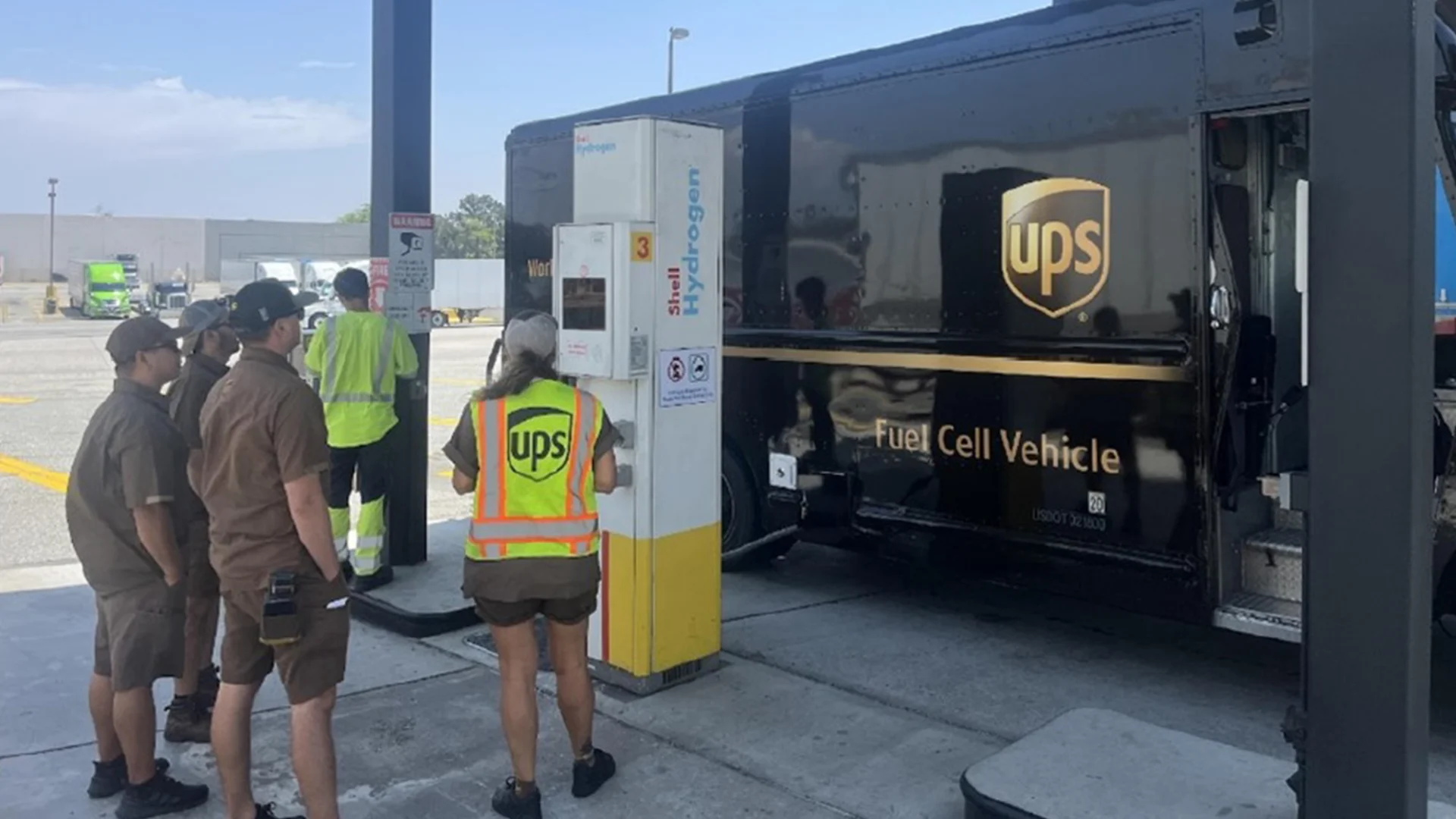
Vehicles/Equipment Funded:

Under the Zero- and Near Zero-Emission Freight Facilities Project grant, CARB funded the following equipment:
  • Fifteen (15) fuel cell hybrid electric delivery vans integrated by Unique Electric Solutions and W.W. Williams.
  • Fifteen (15) 30-kW fuel cell engines developed and built by Cummins/ Accelera /Hydrogenics.

Lessons Learned:

  • Hydrogen Safety Education: When adopting hydrogen technologies, comprehensive, well-documented safety training is critical to avoid project delays and to ensure confidence among end-users, companies, and insurers.
  • Hydrogen Fuel Availability: California’s public hydrogen fueling network is not yet mature enough to support reliable, frequent fueling. Redundant public options or on-site fueling infrastructure are recommended for greater reliability.
  • New vs. Retrofit Vehicles: The long-term practicality of retrofitting older vehicles versus using new models should be carefully evaluated. Older vehicles may require more maintenance and may face parts shortages if the chassis or body is no longer in production. In-cab technology and functionality may also be limited.
  • Preventative Maintenance for Storage: Prior to extended downtime, fuel cell and hydrogen systems must be properly prepared and maintained to prevent fuel cell degradation. Clear storage protocols are essential.

Technology:

Tags:

Vehicles / Equipment Status:​

Infrastructure Status:

Project Facts​

  • DATES: 03/13/2019 – 04/28/2025
  • GRANTEE: The Center for Transportation and the Environment
  • PARTNERS: Unique Electric Solutions,  Cummins/ Accelera / Hydrogenics, University of Texas – Center for Electromechanics, United Parcel Services (UPS), W.W. Williams
  • GRANT NO.: G17-ZNZE-05

Grant Amount​

  • CARB CONTRIBUTION: $4,302,896
  • MATCHING FUNDS: $4,302,896
  • PROJECT TOTAL: $8,605,792

Partners