SUSTAINABLE HEAVY-DUTY INITIATIVES FOR FUTURE TECHNOLOGY

Project

Joint Electric Truck Scaling Initiative (JETSI)

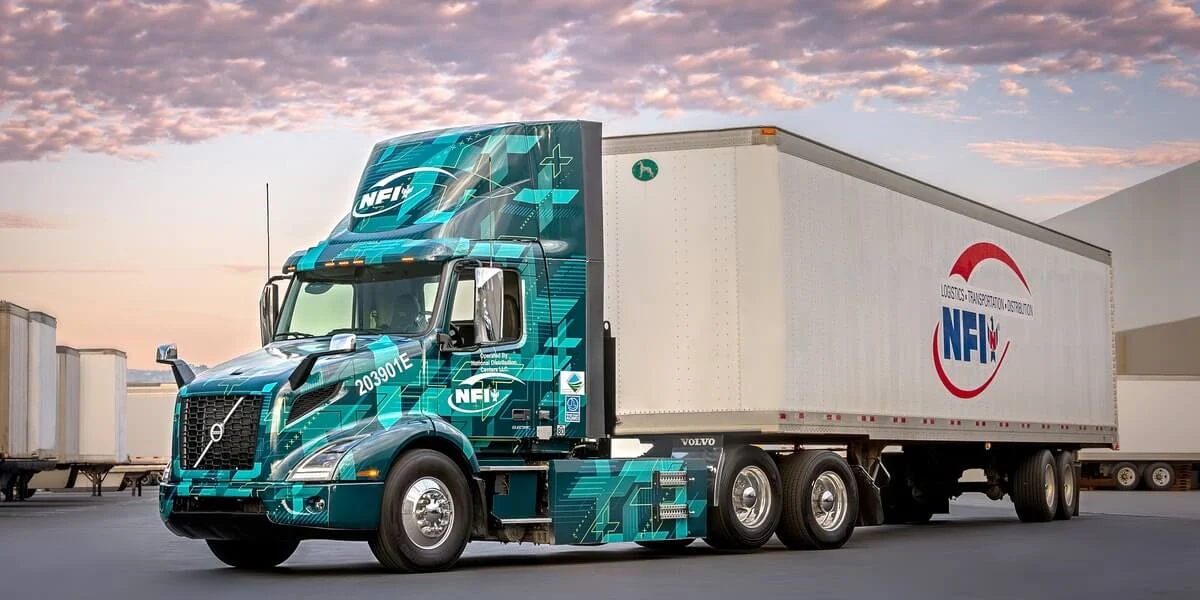
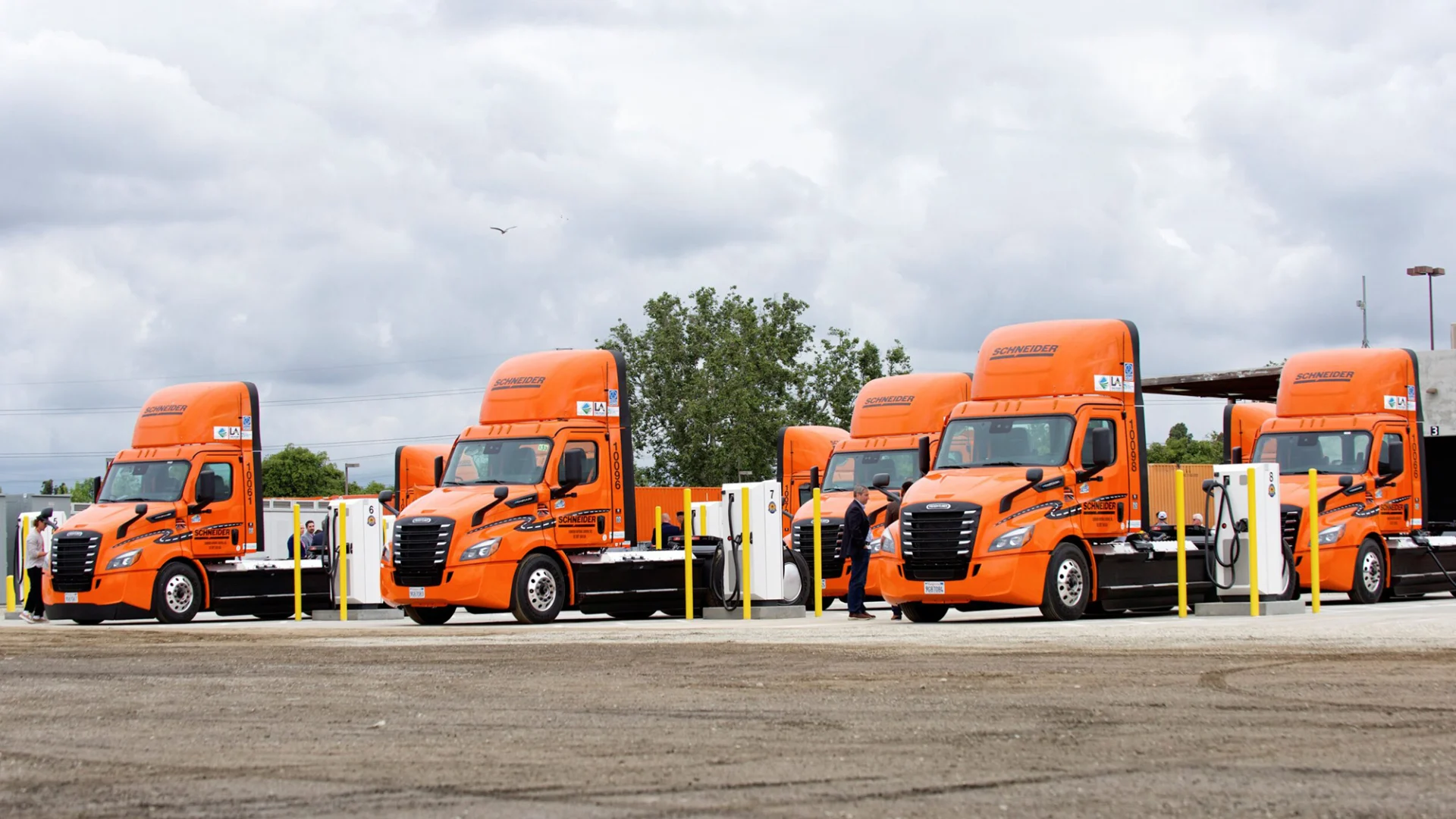
With CARB-certified Class 8 battery electric trucks (BETs) now commercially available, understanding large-scale fleet deployment is critical. JETSI is among California’s first pilot projects to demonstrate the feasibility of deploying at least 50 BETs within a single fleet. The project offers valuable lessons for scaling zero-emission technologies. The trucks will achieve at least 150–200 miles per charge, operating primarily in drayage and short regional haul services. Support systems include charger management software, demand response, uptime services, maintenance plans, and solar-plus-storage solutions. South Coast AQMD leads this regional effort with MSRC, SCE, and the ports of Los Angeles and Long Beach. Fleet partners NFI and Schneider will each deploy 50 trucks; NFI will also install 1 MW of solar and 7.7 MWh of battery storage.

Vehicles/Equipment Funded:

100 Commercial CARB certified Class 8 battery electric trucks (BETs) and infrastructure deployed at freight handling facilities:
  • 50 BETs each at NFI (Ontario) and Schneider (South El Monte)
  • 19 dual cord 350 kW DC fast chargers at NFI, and 16 dual cord 350 kW DC fast chargers at Schneider
  • 1 MW solar, 7.7 MWh battery energy storage, BET maintenance facility at NFI

Lessons Learned:

  • Utility regulatory requirements often exclude funding for grid connections needed to support microgrid technologies like solar and energy storage under programs such as SCE’s Charge Ready Transport.
  • The high costs of grid upgrades, solar and storage systems, temporary power, and IBEW labor significantly increase the total expense of large-scale infrastructure projects over their lifetime.
  • Overcoming these challenges requires coordinated input from multiple agencies—including CPUC, utilities, CEC, CARB, and local air districts—to help fleets deploy infrastructure, solar, and storage at scale and avoid costly delays.
  • Public charging offers increased operational flexibility, but needs an aligned payment solution, similar to fueling cards in the diesel world, in order to reduce complexity with payment for electricity.
  • Innovative fleet management—such as modifying operations to accommodate for the current state of BET limitations—is needed in order to allow fleets to continue to run their operations successfully.
  • Demand charges can cause a significant increase to overall project costs.

Status Updates:

  • Schneider has deployed additional BETs beyond the 50, operating since June 2023 and has travelled over 10,000,000 ZE miles as of early 2026.
  • NFI has also deployed additional BETs. The site has been partially operational since Feb 2024 and fully operational since late 2025 with over 5,000,000 ZE miles travelled as of early 2026. The microgrid at NFI is expected to begin operation in Summer of 2026.

Technology:

Tags:

Vehicles / Equipment Status:​

Infrastructure Status:

Project Facts​

  • DATES: August 2021 – Active
  • GRANTEE: South Coast Air Quality Management District
  • PARTNERS: MSRC, Port of Los Angeles, Port of Long Beach, SCE, NFI, Schneider, Daimler, Volvo, Electric Power Research Institute, Ricardo, CALSTART, University of California Riverside, LA Cleantech Incubator (LACI), Coalition for Clean Air, California Energy Commission, Electrify Commercial, Power Electronics, Gladstein, Neandross & Associates (GNA) (Now TRC), Rio Hondo College, San Bernardino Valley College
  • GRANT NO.: G19-DRAY-01

Grant Amount​

  • CARB Contribution: $16,019,316
  • Matching Funds: $39,522,684
  • CEC Contribution: $10,964,955
  • PROJECT TOTAL: $66,506,955

Partners